 By
By
A kitchen sees more daily traffic than almost any other room in a home. From food preparation to quick snacks and family gatherings, surfaces are constantly exposed to grease, spills, moisture, and bacteria. Keeping this space clean is not just about appearance—it directly affects food safety and overall health.
The good news is that effective kitchen cleaning does not require expensive products or hours of scrubbing. Smart techniques and simple household ingredients can make the job easier and more efficient.
Why Kitchen Hygiene Matters
Food particles, raw ingredients, and moisture create an ideal environment for bacterial growth. Without regular cleaning, contamination can spread quickly across:
- Countertops
- Cutting boards
- Sink drains
- Appliance handles
- Cabinet knobs
A well-maintained kitchen reduces the risk of foodborne illness and extends the lifespan of appliances and surfaces.
Everyday Countertop Cleaning Hack
Countertops collect crumbs, spills, and germs throughout the day.
Quick Method:
- Wipe loose debris with a dry microfiber cloth.
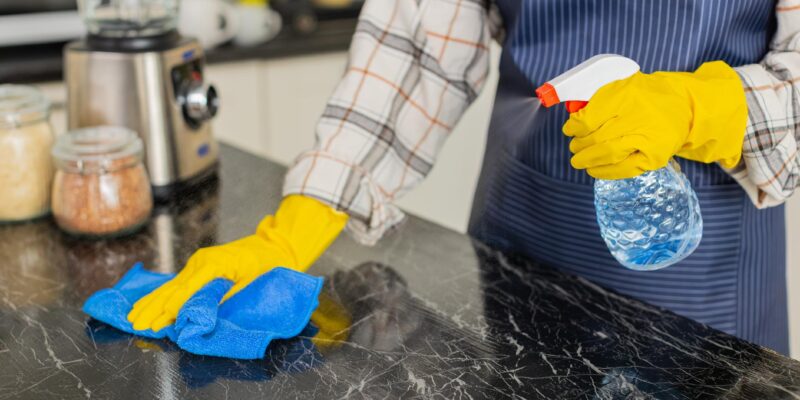
- Spray a mild disinfectant or vinegar-water solution.
- Let it sit for at least 60 seconds before wiping dry.
Allowing contact time ensures proper sanitization rather than simply spreading bacteria around.
For natural stone surfaces like granite, avoid acidic cleaners and use pH-neutral products instead.
Degreasing the Stovetop Without Harsh Chemicals
Grease buildup is one of the toughest kitchen challenges.
Simple Hack Using Baking Soda:
- Sprinkle baking soda over greasy areas.
- Spray lightly with warm water.
- Let sit for 10–15 minutes.
- Scrub gently with a non-abrasive sponge.
Baking soda breaks down grease without damaging surfaces.
For heavy buildup, a small amount of dish soap mixed with warm water works effectively because it is designed to cut through fats.
Reviving a Smelly Kitchen Sink
Kitchen sinks harbor bacteria due to constant moisture and food residue.
Deep-Clean Routine:
- Scrub the basin with dish soap.
- Pour baking soda down the drain.
- Add white vinegar and allow it to fizz.
- Flush with boiling water.
This method helps loosen debris and neutralize odors.
Don’t forget to disinfect the faucet and handles, as they are high-touch areas.
Microwave Cleaning Made Effortless
Dried splatters inside a microwave can be difficult to remove.
Steam Cleaning Trick:
- Fill a microwave-safe bowl with water and lemon slices.
- Heat for 3–5 minutes until steam forms.
- Leave the door closed for a few minutes.
- Wipe interior surfaces easily.
The steam softens dried food, while lemon helps reduce odors.
Cutting Board Sanitizing Tip
Cutting boards, especially those used for raw meat, require extra care.
- Wash immediately after use with hot, soapy water.
- Sanitize using a diluted vinegar or hydrogen peroxide solution.
- Allow to air dry completely.
For wooden boards, rubbing coarse salt and half a lemon over the surface helps remove stains and odors.
Cleaning Stainless Steel Appliances Properly
Stainless steel shows fingerprints and smudges easily.
Effective Technique:
- Wipe with a damp microfiber cloth.
- Apply a small amount of white vinegar.
- Buff dry following the grain of the steel.
For extra shine, a tiny drop of olive oil polished with a soft cloth works well.
Cabinet and Handle Disinfection
Cabinet handles accumulate invisible grime from frequent touching.
- Use disinfectant wipes or a diluted cleaning solution.
- Pay attention to corners and edges.
- Dry thoroughly to prevent moisture damage.
This quick habit significantly reduces cross-contamination.
Speed-Cleaning Routine for Busy Days
When time is limited, focus on these priority zones:
- Sink and faucet
- Countertops
- Stovetop
- Trash area
Spending just 10–15 minutes daily prevents overwhelming buildup later.
Smart Prevention Habits
Prevention reduces cleaning effort.
- Line refrigerator shelves for easy spill cleanup.
- Use splatter guards while cooking.
- Take out trash regularly.
- Clean spills immediately before they dry.
Small habits can dramatically cut down deep-cleaning time.
Natural vs. Commercial Cleaners
Both options have advantages.
Natural Cleaners:
- Eco-friendly
- Budget-friendly
- Safe for light maintenance
Commercial Cleaners:
- Stronger disinfecting power
- Effective for heavy grease
- Designed for specific surfaces
Choosing the right product depends on the level of dirt and surface material.
Common Kitchen Cleaning Mistakes
Avoid these frequent errors:
- Using the same sponge for dishes and surfaces
- Ignoring appliance seals and edges
- Overlooking the trash can lid
- Skipping regular refrigerator checks
Attention to detail ensures a truly clean kitchen, not just a surface-level shine.
Frequently Asked Questions (FAQs)
1. How often should kitchen sponges be replaced?
Kitchen sponges should be replaced every one to two weeks, depending on usage, to prevent bacterial buildup.
2. What is the safest way to clean inside a refrigerator?
Remove shelves and drawers, wash them with warm soapy water, dry thoroughly, and wipe interior walls with a mild baking soda solution.
3. Can I use the same cleaner for all kitchen surfaces?
Not always. Some surfaces like natural stone or stainless steel require specific cleaners to avoid damage.
4. How do I remove stubborn grease from range hood filters?
Soak filters in hot water mixed with dish soap and baking soda for 15–20 minutes, then scrub gently.
5. Is it necessary to disinfect kitchen floors regularly?
Yes, especially in high-traffic areas where food spills occur. Weekly mopping with disinfectant is recommended.
6. What’s the best way to prevent fruit flies in the kitchen?
Dispose of overripe produce quickly, clean drains regularly, and keep trash tightly sealed.
7. How can I safely clean small kitchen appliances like blenders?
Unplug the appliance, wash removable parts separately, and wipe the base with a damp cloth without allowing water to enter electrical components.
A consistently clean kitchen does not require complex methods—just smart habits and efficient techniques. With these practical cleaning hacks, maintaining a hygienic cooking space becomes quicker, easier, and far more manageable.